

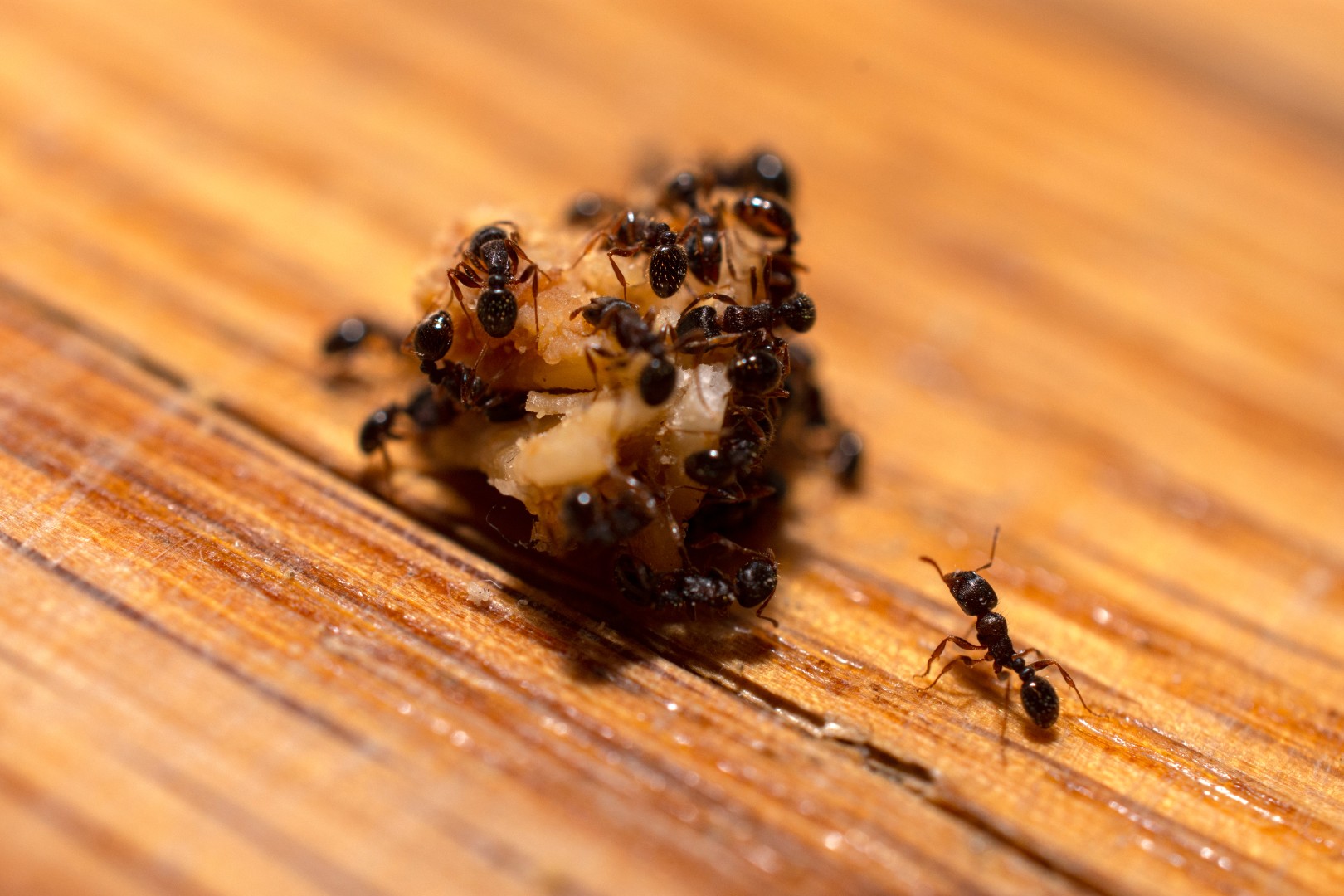
Spring in Southwest Virginia brings warmer temperatures, blooming flowers, and plenty of rain. While those seasonal showers help everything grow, they also create the perfect conditions for ants to thrive. You may even see them inside your house after rain.
If you’ve noticed more ants inside your home lately, you’re not alone. Increased moisture drives ants indoors in search of dry shelter and reliable food sources. In our region, the most common culprits are carpenter ants and odorous house ants. Understanding the difference is key to stopping the invasion effectively.
Odorous House Ants
Odorous house ants are small (about 1/8 inch long) and are dark brown to black. They emit a strong, rotten coconut-like smell when crushed. They often travel in long, visible trails, especially in kitchens and bathrooms.
These ants are primarily searching for food, normally trailing after sweets and greasy substances. Spring rain disrupts their outdoor nests, pushing them indoors where food is more accessible. While they don’t cause structural damage, they can quickly become a nuisance due to their large colony sizes and strong odor.
Carpenter Ants
Carpenter ants are significantly larger than odorous house ants, ranging from 1/4 to 1/2 inches in length. They are typically black, though some may have reddish tones. You may also notice wood shavings, called frass, near their nests.
Carpenter ants aren’t just looking for food; they’re looking for a place to nest. Moist or decaying wood, often caused by excess spring moisture, provides the perfect environment. Over time, their tunneling can weaken wood structures, potentially leading to costly damage if left untreated.
How to Stop the Spring Ant Invasion
To keep these invading ants at bay, keep countertops clean, store food in airtight containers, and promptly clean up crumbs or spills. Even small amounts of food can attract large numbers of ants.
Fix leaky pipes, improve ventilation, and use dehumidifiers in damp areas like basements or crawl spaces. Since moisture attracts both types of ants, this step is critical. Spring in Virginia can bring significant moisture issues, so make sure your house is ready.
Trim back shrubs and tree branches that touch your home and keep mulch and soil levels below siding. Ants often use these as bridges to enter your home. Remember these tips:
- Cut off food supply
- Eliminate moisture and water sources
- Trim back shrubs and tree branches
- Keep mulch and soil levels below siding
When to Call the Professionals
Over-the-counter sprays may seem like a quick fix, but they often only eliminate the ants you see. There are always more that are hiding. In some cases, these treatments can actually “split” a colony, causing it to spread and worsen the infestation.
Carpenter ants require immediate attention because they can cause structural damage. If you’re dealing with recurring ant problems or suspect a larger infestation, it’s best to bring in a professional who can properly identify the species and treat the source.
If ants are taking over your space this season, don’t wait. Schedule a professional inspection today with Bug Man Exterminating and stop the problem at its source.